Aera Technology named a Leader in the Gartner® Magic Quadrant™ for Decision Intelligence Platforms. Read Now

ESG

Advance sustainability goals with Aera skills that mitigate inventory waste, optimize circular economy models, ensure compliance, and much more.

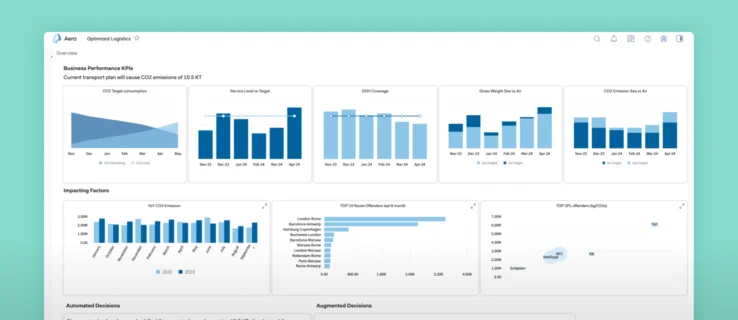
Carbon-Footprint optimization screen

Carbon-Footprint optimization

Monitor supply chain activities in real time to flag deviations from carbon targets and trigger corrective actions.

Understands

Tracks emissions across transportation routes, manufacturing processes, and distribution networks against sustainability targets.

Recommends

Identifies high-emission activities, alternative sourcing options, and route or mode changes to reduce carbon footprint.

Acts

Automatically flags carbon-target violations, triggers sustainability reviews, and initiates low-carbon alternative workflows.

Learns

Continuously improves carbon optimization by learning from outcomes to reduce overall carbon emissions, improve compliance with sustainability commitments, and trigger decarbonization strategies.
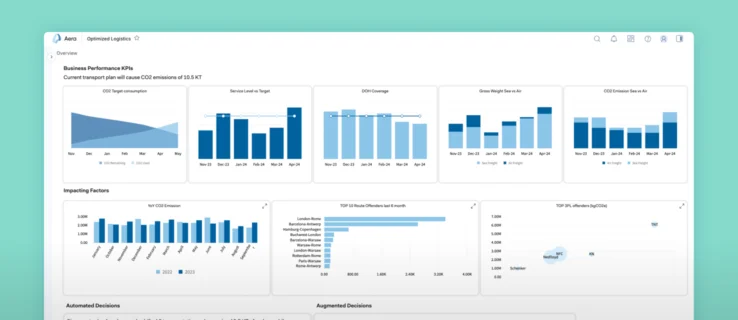
Circular Economy Scenario Planning screen

Circular Economy Scenario Planning

Analyze product design and reverse flows to recommend circular logistics models that improve sustainability.

Understands

Evaluates product lifecycles, reverse logistics flows, refurbishment potential, and circularity opportunities across the value chain.

Recommends

Provides circular economy scenarios with trade-off analysis between cost, service levels, and environmental impact.

Acts

Automatically generates circularity models, design reviews, and optimization workflows enhanced with multi-scenario circular outcomes.

Learns

Continuously improves circular strategies by learning from outcomes to maximize material recovery and product reuse rates, and reduce waste and environmental footprint sustainably.

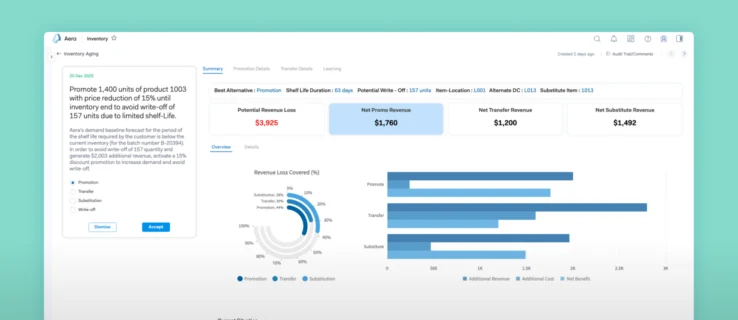
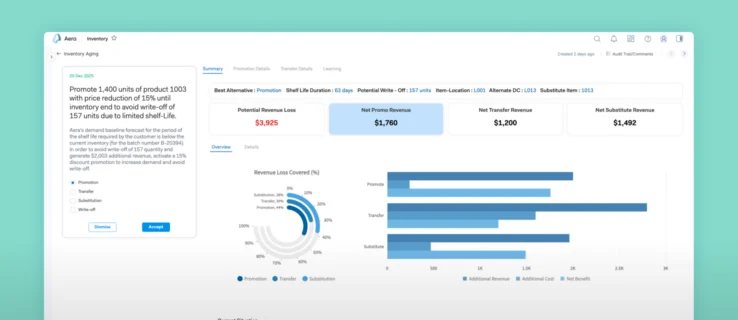
Ageing Inventory Management screen

Aging Inventory Management

Minimize waste and optimize usage by proactively managing aging inventory.

Understands

Monitors inventory age, demand velocity, expiration dates, and obsolescence risk across SKUs and locations.

Recommends

Identifies at-risk inventory with suggested actions including markdowns, transfers, liquidation, or production adjustments.

Acts

Automatically triggers disposal workflows, markdown approvals, and inventory reallocation processes.

Learns

Continuously improves inventory risk management by learning from outcomes to reduce write-offs and obsolescence costs, improve working-capital efficiency, and enhance inventory turnover.

Supply Chain Loss Prevention screen

Supply Chain Loss Prevention

Minimize future losses by taking preventive action on projected excess production.

Understands

Identifies potential overproduction by analyzing projected volumes against anticipated demand.

Recommends

Suggests preventive measures including production plan reductions, schedule adjustments, or order cancellations.

Acts

Generates proactive prevention plans before resources are committed to unnecessary production.

Learns

Continuously improves forecasting logic by learning from outcomes to decrease inventory waste, optimize resource allocation, and reduce supply chain costs.

Supply Chain Loss Mitigation

Supply Chain Loss Mitigation

Prevent inventory losses by proactively managing at-risk stock before it becomes waste.

Understands

Identifies short-dated, blocked, and excess inventory by matching supply and demand at the order-line and batch level.

Recommends

Suggests optimal mitigation actions including redeployment, promotions, liquidation, marketplace listing, donation, or scrap.

Acts

Generates ready-to-execute plans for each identified stock situation, enabling immediate action.

Learns

Continuously improves inventory management by learning from outcomes to reduce stock waste, improve inventory turnover rates, and enhance sustainability outcomes.